

Temple of Literature in Hanoi: A Timeless Journey Through Vietnam’s First University
In the heart of Vietnam’s capital lies one of the country’s most meaningful cultural landmarks: the Temple of Literature in Hanoi. Founded in 1070 during the Ly Dynasty, this historic complex stands as a symbol of Vietnam’s deep respect for education, scholarship, and intellectual achievement.
Dedicated to Confucius and revered scholars, the Temple of Literature later became Vietnam’s first national university, where generations of talented students studied to become royal officials. Today, it remains a serene cultural destination where visitors can explore elegant architecture, centuries-old traditions, and inspiring stories of learning.
For families traveling to Hanoi, the Temple of Literature in Hanoi offers a meaningful experience — blending history, architecture, and cultural storytelling that both adults and children can appreciate.
A Brief History of the Temple of Literature in Hanoi
The Temple of Literature in Hanoi was founded in 1070 by Emperor Ly Thanh Tong as a place to honor Confucius, the Chinese philosopher whose teachings shaped education and social values across East Asia.
Just a few years later, in 1076, the complex became home to Quoc Tu Giam, Vietnam’s first national university. At that time, only the sons of royal families and high-ranking officials were admitted. Over time, however, talented students from across the country were also allowed to study here, reflecting Vietnam’s strong belief that education should nurture capable minds regardless of social background.
For nearly 700 years, this institution trained scholars who would serve the royal court. The success of these scholars was celebrated through elaborate ceremonies and public recognition, reinforcing Vietnam’s long-standing tradition of valuing education — known locally as “truyền thống hiếu học.”
Today, the Temple of Literature in Hanoi is not only a historical monument but also a powerful reminder of how knowledge and learning shaped the nation.
Architecture of the Temple of Literature in Hanoi
One of the most remarkable features of the Temple of Literature in Hanoi is its traditional Vietnamese architectural design. The complex covers several courtyards aligned along a central axis, reflecting Confucian principles of harmony, order, and balance.
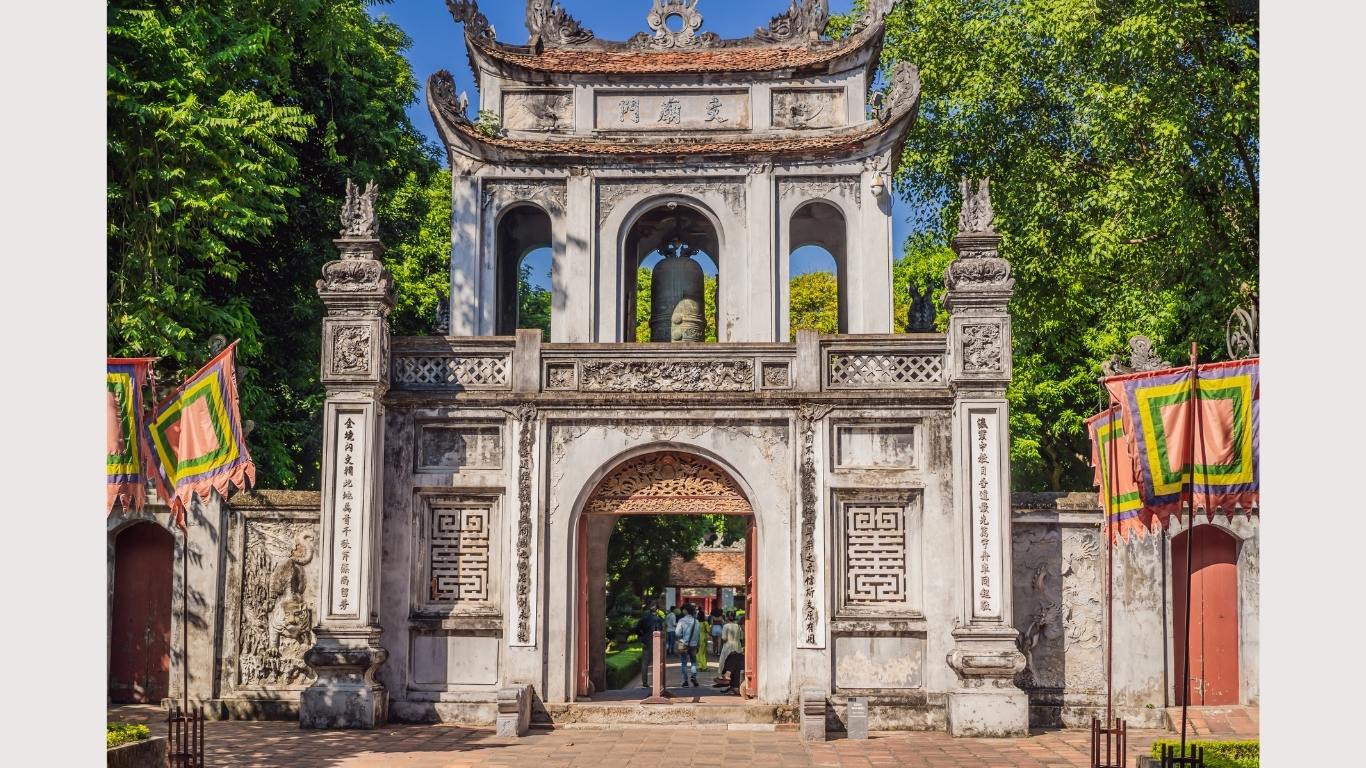
Visitors enter through Văn Miếu Gate, passing through five beautiful courtyards, each representing a stage of learning and enlightenment.
First Courtyard – The Gateway to Knowledge (Văn Miếu Môn)
The first courtyard welcomes visitors with tall ancient trees and peaceful gardens. The pathway leads toward the Great Middle Gate (Đại Trung Môn), symbolizing the beginning of a student’s journey toward wisdom.
The tranquil atmosphere immediately contrasts with the lively streets of Hanoi, making the Temple of Literature a calm cultural retreat.
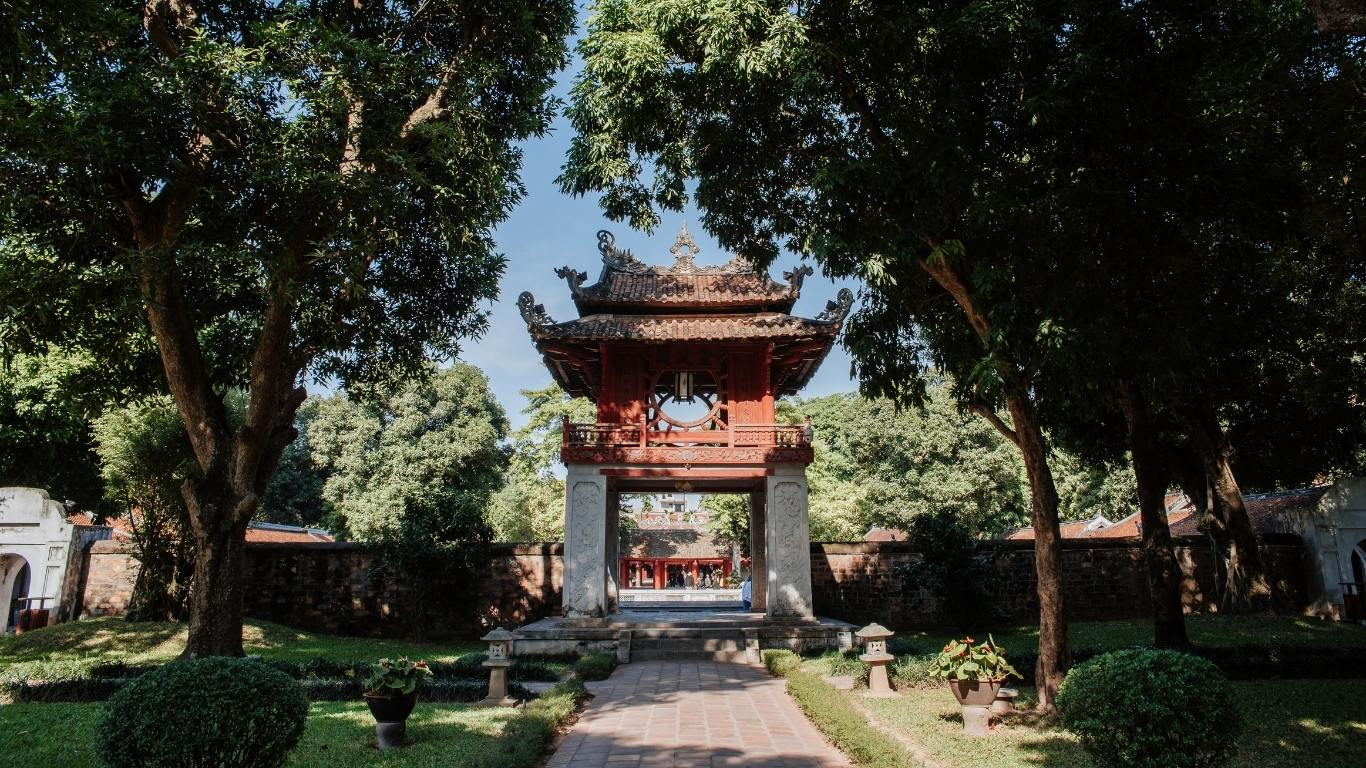
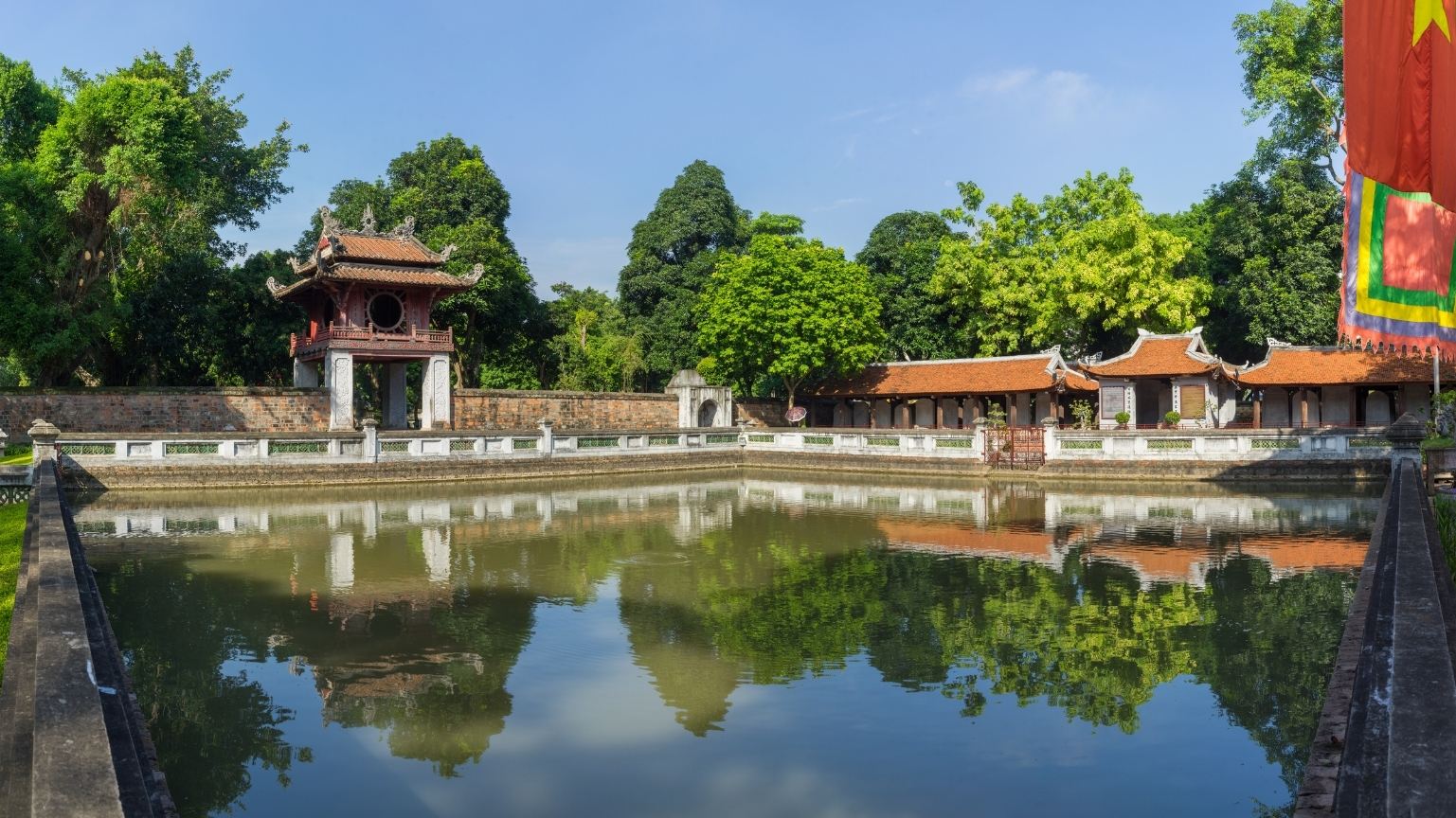
Second Courtyard – The Path of Learning (Khue Van Pavillion)
The second courtyard features elegant pavilions and symmetrical landscaping that reflect classical Vietnamese design influenced by Confucian philosophy.
These quiet spaces once served as areas where scholars prepared themselves mentally before entering deeper into the academic halls.
Visitors today often pause here to take photographs or simply enjoy the calm surroundings.
Third Courtyard – The Stelae of Doctors
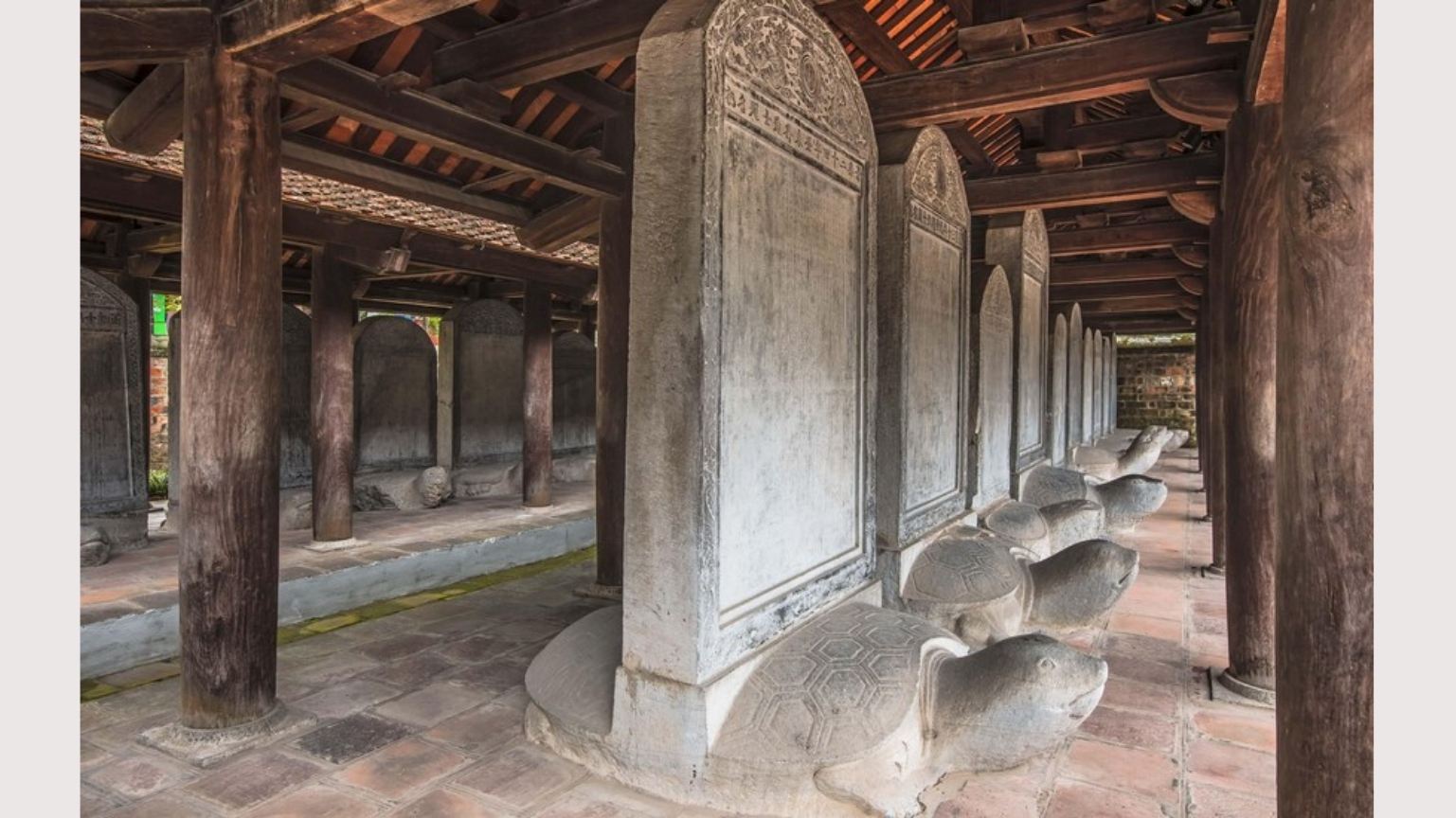
Perhaps the most famous part of the Temple of Literature in Hanoi is the Doctor’s Stelae Garden.
Here stand 82 stone stelae mounted on turtle statues, each engraved with the names of scholars who successfully passed royal examinations between the 15th and 18th centuries.
The turtle symbolizes wisdom, longevity, and knowledge in Vietnamese culture. These stelae represent the highest academic achievements in Vietnam’s feudal era.
Students visiting the temple today sometimes gently touch the turtles’ heads for good luck in their studies.
Fourth Courtyard – The Heart of the Temple
The fourth courtyard houses the House of Ceremonies and the Sanctuary of Confucius.
Inside, visitors can see statues of Confucius and his four main disciples, along with altars honoring Vietnamese scholars who contributed to the country’s intellectual history.
During important cultural ceremonies, traditional rituals and performances take place here, maintaining the temple’s educational and spiritual significance.
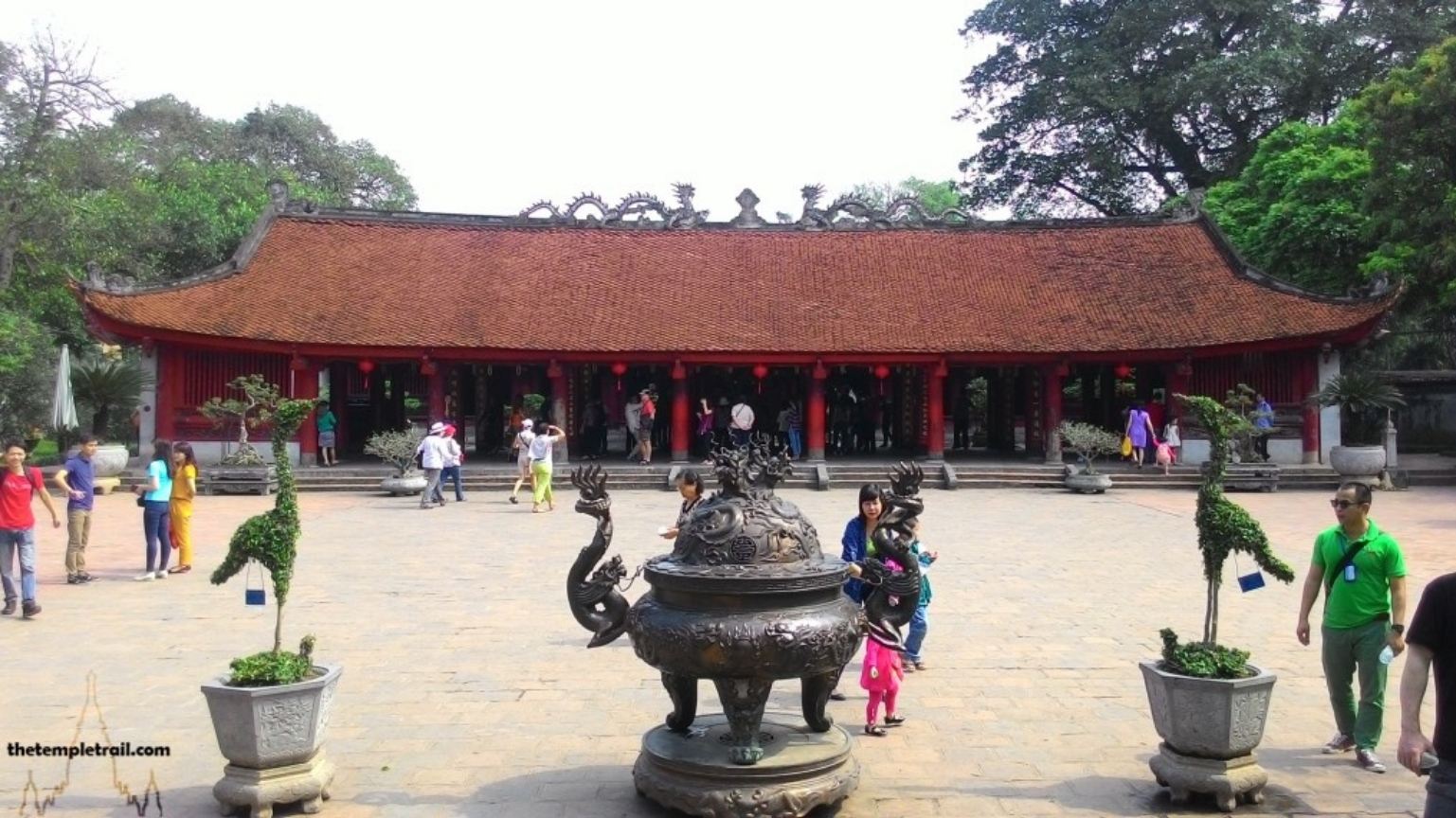
Fifth Courtyard – Vietnam’s First University
The final courtyard was once home to Quoc Tu Giam, Vietnam’s earliest university.
Although parts of the original structures were damaged over centuries, the area has been restored to reflect its historical role as an academic center.
Exhibits now showcase how scholars studied, including traditional classrooms, writing tools, and historical documents.
For families visiting Hanoi, this section offers children an engaging glimpse into how education functioned centuries ago.
Stories of Scholars and Vietnam’s Tradition of Learning
The Temple of Literature in Hanoi reflects a deeply rooted Vietnamese cultural value: respect for learning and intellectual achievement.
In ancient Vietnam, becoming a scholar was one of the most prestigious accomplishments. Students studied Confucian philosophy, poetry, history, and governance for years before taking the royal examinations.
Success in these exams could elevate an entire family’s social status.
Stories of scholars who rose from humble villages to become royal advisors are still widely told today. These stories inspire modern Vietnamese students, many of whom visit the temple before important exams.
During graduation season, you will often see university students wearing traditional áo dài while taking photos in the temple courtyards — celebrating the continuation of Vietnam’s educational tradition.
Why the Temple of Literature in Hanoi Is Perfect for Families
For families traveling to Hanoi, the Temple of Literature in Hanoi offers a relaxed cultural experience that combines education and exploration.
Children often enjoy:
-
Walking through peaceful gardens and courtyards
-
Learning about ancient schools and scholars
-
Seeing stone turtles and historic monuments
-
Participating in cultural storytelling tours
The calm atmosphere makes it easy for families to explore at a comfortable pace, away from the busy city streets.
Parents also appreciate how the site connects history, architecture, and cultural values in a way that is accessible for all ages.
When to Visit the Temple of Literature in Hanoi
The Temple of Literature in Hanoi can be visited year-round, but mornings and late afternoons are especially pleasant.
Best times to visit:
-
Early morning: peaceful atmosphere and cooler weather
-
Late afternoon: soft sunlight ideal for photography
-
Spring season: when Hanoi weather is mild and cultural festivals may take place
Avoiding midday heat ensures a more comfortable experience, especially for families with young children.
A Cultural Stop on Any Hanoi Heritage Tour
The Temple of Literature in Hanoi is often included in Hanoi heritage tours alongside other historical landmarks such as:
-
Hoan Kiem Lake
-
The Old Quarter
-
Ho Chi Minh Mausoleum
-
The Vietnam Museum of Ethnology
Together, these sites tell the story of Hanoi’s past and present — from ancient dynasties to modern city life.
A guided visit can enrich the experience by sharing stories behind the architecture, the scholars, and the cultural traditions that shaped Vietnam.
The Temple of Literature in Hanoi stands as a beautiful symbol of Vietnam’s intellectual heritage. More than just an ancient monument, it represents the nation’s respect for education, perseverance, and the pursuit of knowledge.
For travelers seeking cultural insight, architectural beauty, and meaningful storytelling, this historic site offers an unforgettable experience.
Families, students, and curious visitors alike will find that walking through the quiet courtyards of the Temple of Literature in Hanoi is not just a visit to the past — but a journey into the values that continue to shape Viet Nam today.
